Avelo suspends Tuesday flights: A worrying move or a more focused airline?

May 14, 2026
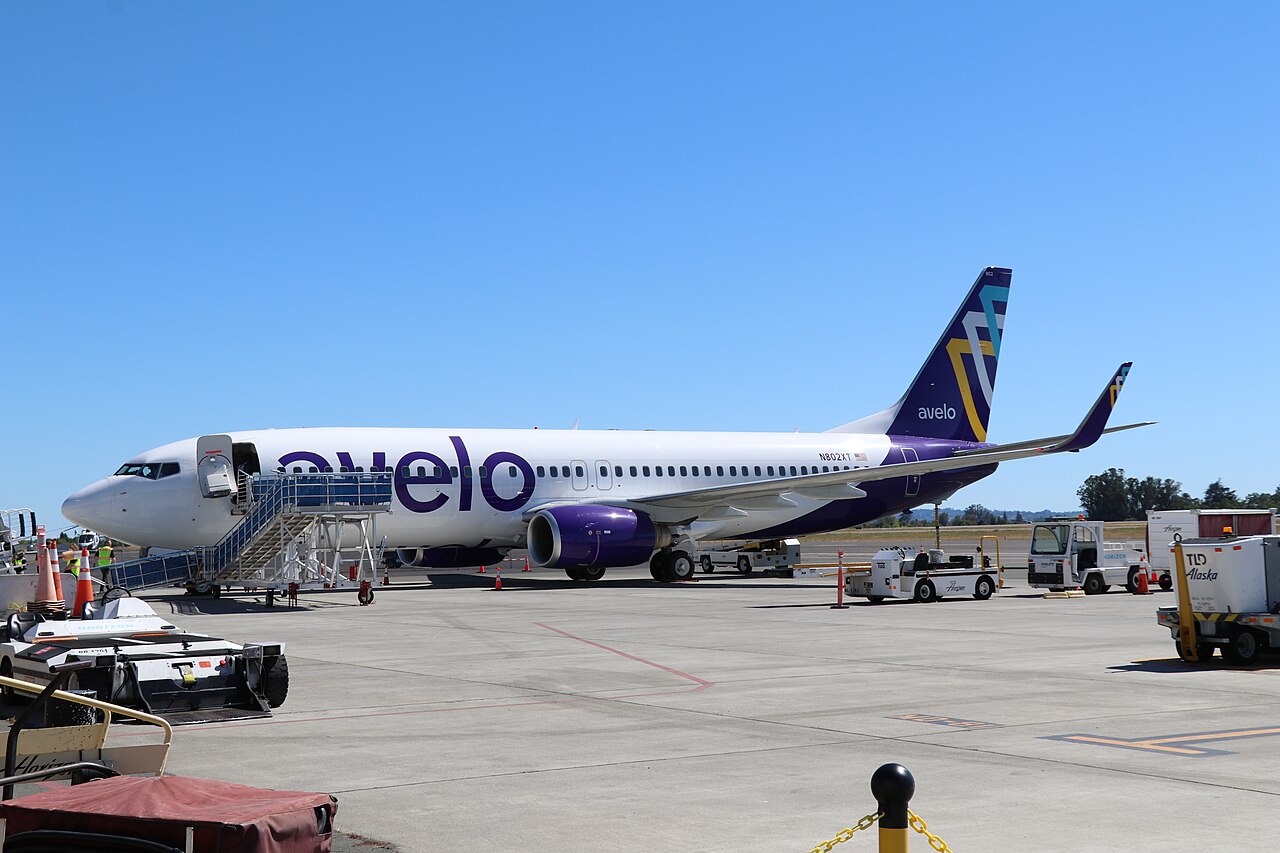
Avelo Airlines is effectively eliminating most Tuesday flights across its network this summer, a move that highlights both the operational realities of the ultra-low-cost carrier market and the growing pressure facing US domestic airlines.
The US-based low-cost carrier will suspend the majority of its Tuesday services from mid-May through mid-August, removing around 50 routes from its spring and summer schedule compared with the same period last year.
According to the airline’s published timetables, there will be virtually no Tuesday departures across much of Avelo’s network during the peak summer season, although a small number of exceptions remain.
Avelo’s decision to suspend Tuesday operations mirrors a similar move last year, when the airline also paused Tuesday flights throughout the peak summer period, according to Aeroroutes.
Why Tuesdays remain one of aviation’s weakest travel days
As previously reported by Aerospace Global News, Tuesday has consistently been one of the lowest-traffic days of the week for air travel.
Leisure travellers tend to prefer departures closer to weekends, while business travel generally peaks on Monday mornings and later in the week. That leaves Tuesdays stuck in an awkward middle ground, particularly for carriers heavily exposed to discretionary leisure traffic.

Airline pricing and scheduling strategies reinforce the trend. Carriers frequently lower fares to stimulate midweek demand, leading to weaker yields and greater seat availability compared with high-demand days such as Fridays and Sundays.
For ultra-low-cost carriers built around maximising aircraft utilisation, weak midweek demand can quickly become uneconomical.
Avelo is concentrating flights around peak leisure demand
Rather than discounting aggressively to fill aircraft, Avelo appears to be reducing capacity while attempting to preserve yields and lower operating costs.
The airline’s network is heavily focused on secondary airports and leisure-oriented destinations, where demand tends to cluster around long weekends and short breaks.
Under the revised schedule, Avelo’s operations will concentrate primarily between Thursday and Sunday, while Mondays and Wednesdays are expected to maintain more moderate levels of service.

Aircraft maintenance scheduling becomes easier, while crew rostering and recovery planning can be handled more efficiently during the peak summer season. Concentrating flying around stronger demand periods may also help improve reliability and reduce losses on weaker routes.
The move comes as broader signs of weakness emerge in the US domestic airline market.
Recent Bureau of Transportation Statistics (BTS) data showed US domestic airline profitability weakened significantly during 2025 despite lower fuel costs, as carriers faced rising labour expenses and weaker pricing power across domestic markets.
Avelo’s network cuts reflect wider retrenchment
The Tuesday suspension follows a broader period of consolidation for Avelo.
Last year, the airline closed its West Coast operations and retired its Boeing 737-700 fleet, moves it described as part of a balance sheet transformation. However, the changes represented a significant retrenchment for a carrier that had previously focused heavily on decentralised growth across underserved US markets.
The airline also faced criticism over its decision to operate deportation flights on behalf of the US Department of Homeland Security and Immigration and Customs Enforcement (ICE), a move that triggered protests and boycott calls in Delaware, one of the airline’s strongest markets.
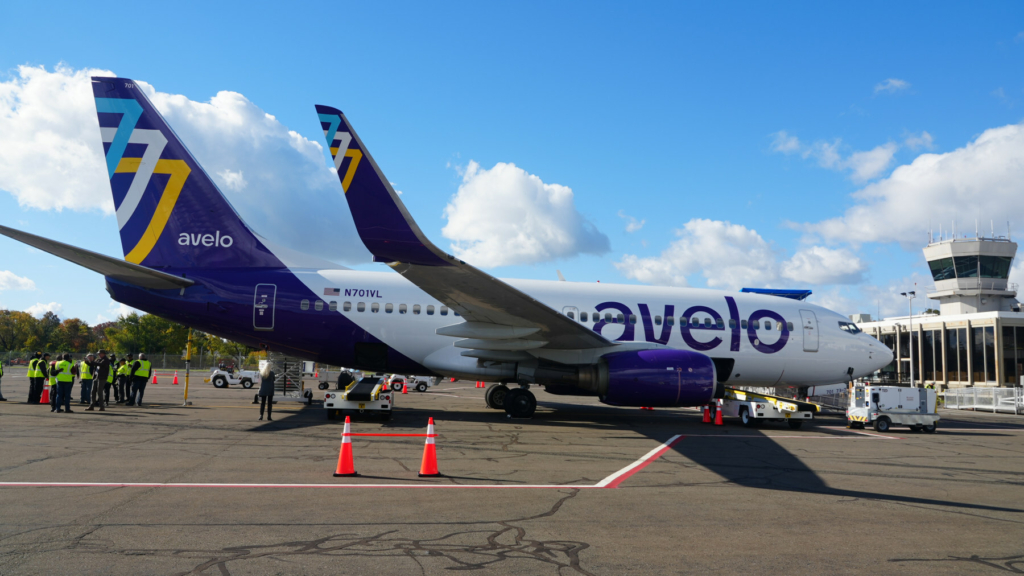
Today, Avelo is increasingly concentrating operations around a smaller number of core bases, including:
- New Haven, Connecticut
- Wilmington/Philadelphia region, Delaware
- Concord/Charlotte, North Carolina
- Lakeland, Florida
A fifth base at Dallas/McKinney Airport in Texas is still planned later this year.
Meanwhile, the airline has exited bases at Mesa Gateway Airport in Arizona, Raleigh-Durham International Airport and Wilmington International Airport in North Carolina.
In January, Avelo said it was undergoing recapitalisation and claimed its cash position was “now one of the strongest in the US airline industry relative to its size”.
Can Avelo still grow after cutting back?
Despite the retrenchment, Avelo is still positioning itself for future expansion.
The airline currently operates a fleet of eight Boeing 737-700s and 14 Boeing 737-800s, but in September 2025, it placed a major order for 50 Embraer E195-E2 aircraft, alongside purchase rights for a further 50.
The deal, valued at approximately US$4.4 billion, is expected to begin delivering aircraft in 2027.

The order suggests Avelo still sees long-term growth opportunities, even as it restructures its network and operating model in the short term.
LCC business model under pressure
Research from McKinsey & Company recently identified several structural challenges affecting North American low-cost and ultra-low-cost carriers, including rising labour costs, weakening demand among lower-income travellers, and legacy airlines increasingly replicating budget-carrier pricing strategies.
Historically, low-cost carriers often outperformed full-service airlines financially. In recent years, however, that gap has narrowed sharply.
Against that backdrop, Avelo’s disappearing Tuesdays may represent less a crisis than a sign of a carrier becoming more disciplined about where, and when, it can profitably fly.
Featured image: Photo: Timothy Powaleny / Wikimedia Commons