First apparent two-seat Su-57 emerges as Russia expands stealth fighter ambitions

May 18, 2026
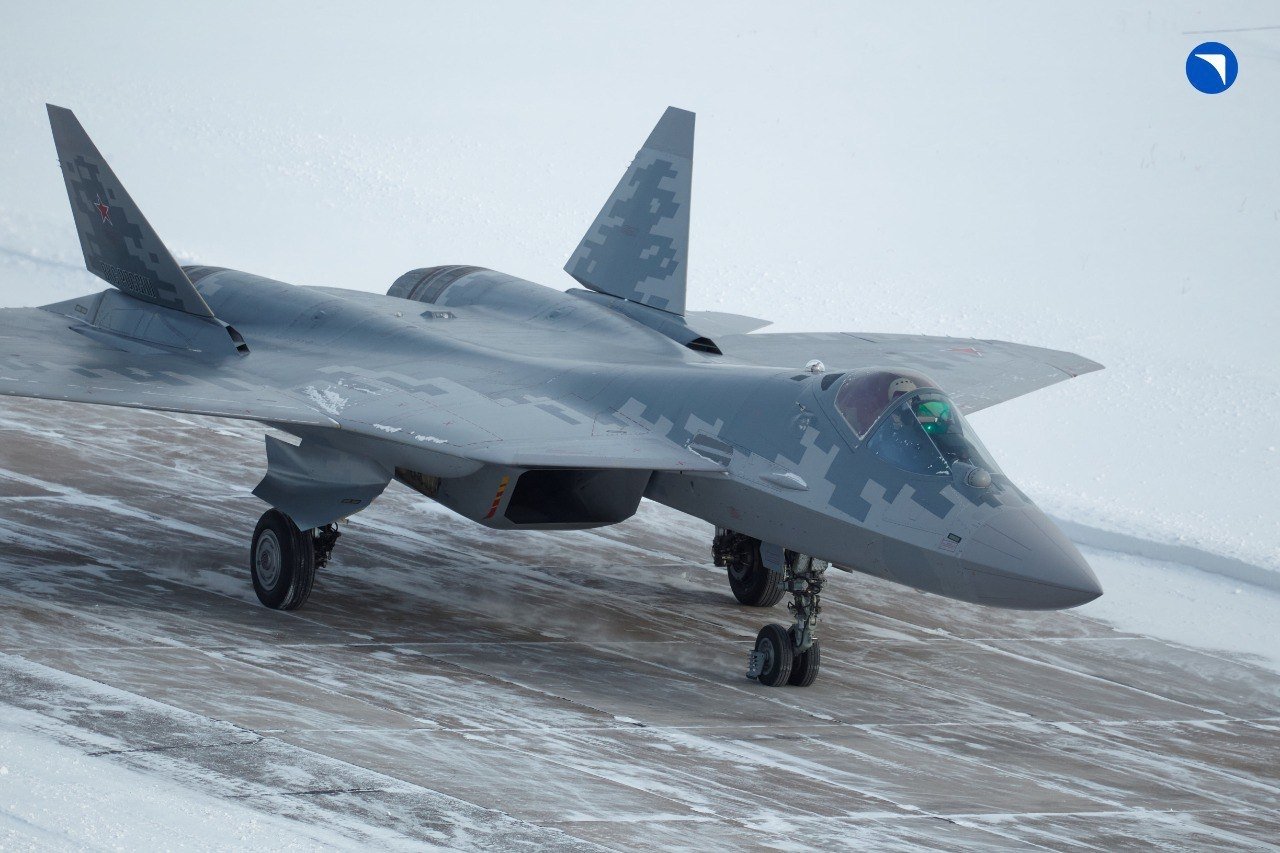
Images circulating on Russian social media appear to show the first two-seat variant of the Sukhoi Su-57, potentially marking a significant evolution of Russia’s stealth fighter programme toward training, manned-unmanned teaming and future export markets.
The aircraft, reportedly designated the Su-57D, was first shown in an image published by the Russian Telegram channel Fighterbomber, an account widely believed to have links to the Russian Aerospace Forces.
The image appears to show the aircraft conducting taxi testing with a visibly enlarged cockpit section and extended canopy accommodating a second crew member seated behind the pilot.
While Russian authorities have not officially confirmed the aircraft’s designation or role, the emergence of a two-seat Su-57 has long been anticipated by defence analysts.
Two-seat Su-57D prototype appears during taxi testing in Russia
The aircraft shown in the images features a cockpit arrangement similar to that of the Sukhoi Su-30, with the rear crew member positioned at a raised elevation behind the pilot.
The emergence of the aircraft follows recent sightings of China’s twin-seat Chengdu J-20S, highlighting growing interest among major powers in adapting fifth-generation fighters for multi-crew operations.
With the unveiling of the two-seat variant of the Su-57- aka the Su-57D (?) – it appears that, following the J-20S (AS), there is now a second 5th-generation aircraft available in a two-seat configuration.
— @Rupprecht_A (@RupprechtDeino) May 17, 2026
1. pic.twitter.com/JgThpiEdfA
Two-seat fifth-generation fighters remain relatively uncommon globally. Neither the Lockheed Martin F-22 Raptor nor the Lockheed Martin F-35 Lightning II has a twin-seat operational variant.
Turkish defence outlet TurDef reported that plans for a two-seat Su-57 had previously been delayed as Russia prioritised production and refinement of the baseline single-seat aircraft while managing financial pressures linked to the war in Ukraine.
Why Russia may want a twin-seat Su-57
The appearance of a second crew position could indicate several potential operational roles for the aircraft beyond pilot training alone.
One of the most significant possibilities is the expansion of Russia’s manned-unmanned teaming (MUM-T) ambitions, particularly involving the Sukhoi S-70 Okhotnik-B combat drone programme.
Su-57 two-seater, reportedly designated Su-57D.
— The Military Watch (@MarcinRogowsk14) May 17, 2026
If this is to be a training variant, I propose the NATO codename Melon. pic.twitter.com/vMNPATzjc5
Russia has increasingly linked the Su-57 programme with the Okhotnik-B loyal wingman concept, including limited operational testing during the war in Ukraine. In 2024, an Su-57 reportedly destroyed a malfunctioning S-70 drone during a test mission after the aircraft lost control.
A second crew member aboard the Su-57D could potentially:
- coordinate unmanned aircraft,
- manage electronic warfare systems,
- oversee sensor fusion,
- or direct future autonomous strike operations.
The additional crew station may also reduce pilot workload during complex missions involving large amounts of sensor and battlefield data.
India’s former FGFA programme still shapes the Su-57 story
The emergence of a twin-seat Su-57 also revives memories of the former Russian-Indian FGFA (Fifth Generation Fighter Aircraft) programme, which was based on a planned derivative of the Su-57.
Under the original arrangement, India’s Hindustan Aeronautics Limited (HAL) was expected to contribute to areas including cockpit displays, navigation systems, onboard computing and defensive systems.
India ultimately withdrew from the programme in 2018, citing concerns surrounding the aircraft’s stealth performance, engines and development timeline.
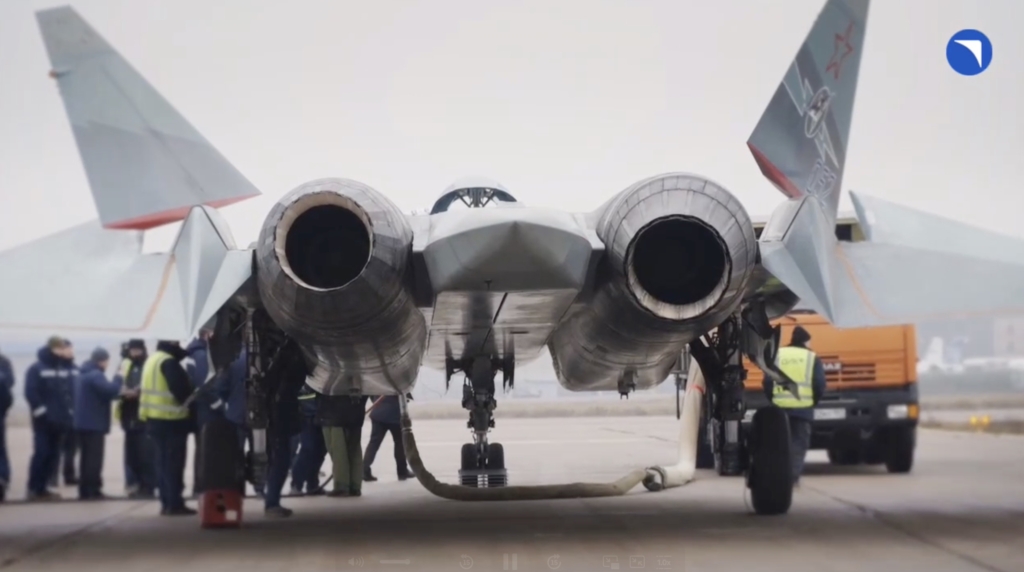
However, speculation periodically resurfaces regarding whether India could reconsider involvement in some form as it continues seeking long-term fifth-generation fighter capability.
Russia has meanwhile continued pursuing export opportunities for the Su-57, with Algeria becoming the first confirmed foreign customer for the aircraft.
Moscow has additionally claimed that further export contracts have been signed, although no additional customers have been publicly identified.
Russia continues expanding the role of the Su-57 fighter
The appearance of the Su-57D suggests Russia may now be broadening the role of its flagship stealth fighter beyond traditional air superiority missions.
While the aircraft’s precise capabilities remain unclear, the addition of a second crew member could reflect the growing complexity of modern air combat, particularly as air forces increasingly integrate drones, electronic warfare and networked battlefield systems into frontline operations.
At this stage, the aircraft appears to remain in an early testing phase, and no timeline for operational service has been announced.
Featured Image: UAC